Two variables in everyday eating have an outsized relationship with the functioning of the digestive system: the quantity and variety of dietary fibre consumed daily, and the volume and timing of fluid intake. Both are precisely measurable, both are widely underestimated in standard UK eating patterns, and both can be substantially improved within a home kitchen context without supplementary intervention.
The UK Fibre Gap
Published data from the National Diet and Nutrition Survey consistently records average UK dietary fibre intake at approximately 18–19g per day. The Scientific Advisory Committee on Nutrition (SACN) recommends 30g per day for adults. This gap — approximately 11–12g daily — is the single most consistent finding in UK nutritional survey data over the past two decades. It is not a small shortfall; it represents roughly 35–40% of the daily intake target being routinely unmet by the average adult.
The sources of this gap are predictable. Refined grains — white bread, white rice, white pasta — contribute energy without the fibre content of their wholegrain equivalents. Processed and convenience foods, which constitute a significant proportion of UK daily calorie intake by published survey data, are typically low in fibre. Vegetable and fruit consumption, the primary dietary fibre source for most adults, falls below the five-a-day reference point for the majority of the UK population.
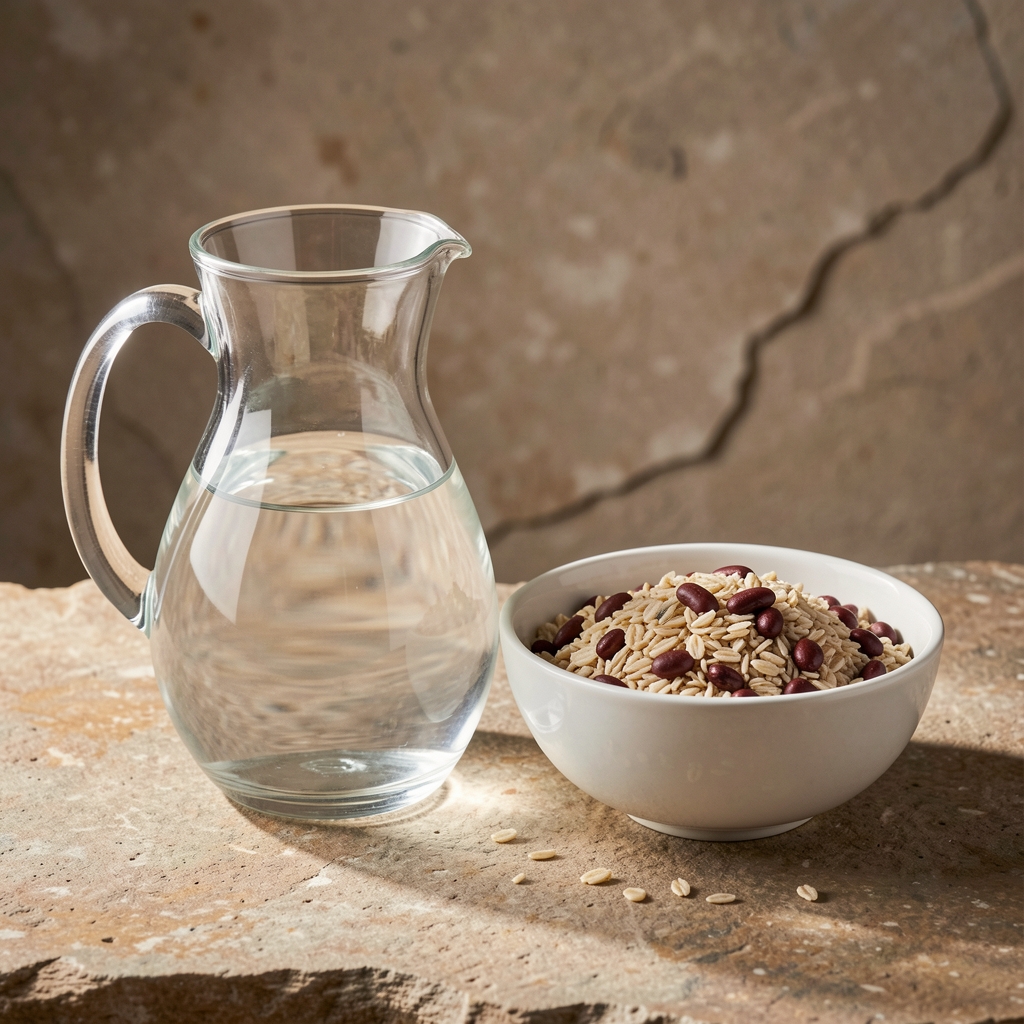
Closing this gap does not require radical dietary revision. The substitution of wholegrain for refined grain equivalents across a week — brown rice in place of white, oats in place of instant cereal, whole wheat pasta — adds approximately 6–8g of daily fibre without any other change. Adding one serving of legumes (lentils, chickpeas, or beans) to a daily meal adds a further 5–8g. These two changes alone approach the 11–12g shortfall.
Source: McCance and Widdowson's Composition of Foods, 7th edition.
Soluble and Insoluble Fibre: A Practical Distinction
Dietary fibre is not a single compound — it is a category of plant-derived carbohydrates that resist digestion in the small intestine. Within this category, two primary types with distinct functional roles are well-documented in nutritional literature: soluble fibre, which dissolves in water to form a gel-like substance, and insoluble fibre, which does not dissolve and adds bulk to the digestive transit.
Soluble fibre — found in oats, legumes, apples, and barley — interacts with bile acids in the small intestine and has a documented role in moderating the rate at which glucose enters the bloodstream after a meal. It also serves as a substrate for fermentation by gut bacteria, contributing to the production of short-chain fatty acids that are the primary energy source for the cells lining the large intestine. Beta-glucan, the specific soluble fibre in oats, has been the subject of extensive peer-reviewed research for its role in normal cholesterol management.
Insoluble fibre — found in wheat bran, whole grains, and the skins of vegetables and fruits — accelerates the movement of material through the digestive system and adds mechanical bulk to stool. It has a documented relationship with digestive regularity and is the fibre type most directly implicated in the reduction of constipation risk. A diet that supplies both types — which a varied whole-food eating pattern does naturally — provides distinct and complementary support to the digestive process.
"The gut's daily demands are specific and sequential: sufficient fibre to maintain transit rhythm, sufficient fluid to allow that fibre to function. Neither operates effectively in the absence of the other."
Phoebe Ashcroft — Taronel Notebook, March 2026
Hydration Across the Working Day
Adequate fluid intake is the operational complement to dietary fibre. Insoluble fibre requires sufficient fluid to function effectively in the digestive system — a high-fibre intake without adequate hydration can paradoxically slow digestive transit rather than accelerate it. The relationship is documented in published gastroenterological research and has practical implications for the sequence of dietary changes a person makes when increasing fibre intake.
The European Food Safety Authority (EFSA) reference intake for total water is 2.0 litres per day for adult women and 2.5 litres for adult men, inclusive of water derived from food. Approximately 20–30% of daily fluid intake typically derives from food in a standard diet, which means the drinking water target is approximately 1.5–2.0 litres for most adults in temperate climates. Physical activity and ambient temperature increase this requirement.
In a standard working day, the practical challenge is not the total volume but the timing and distribution. Hydration delivered in a single large intake is less effective than the same volume distributed across the day. A practical framework: 400–500ml of water consumed on waking before the first meal; 300–400ml consumed with each main meal; and 200–300ml of additional fluid (water, herbal infusion, or diluted juice) consumed mid-morning and mid-afternoon. This pattern distributes daily fluid intake without requiring attention to volume measurement at any individual consumption point.
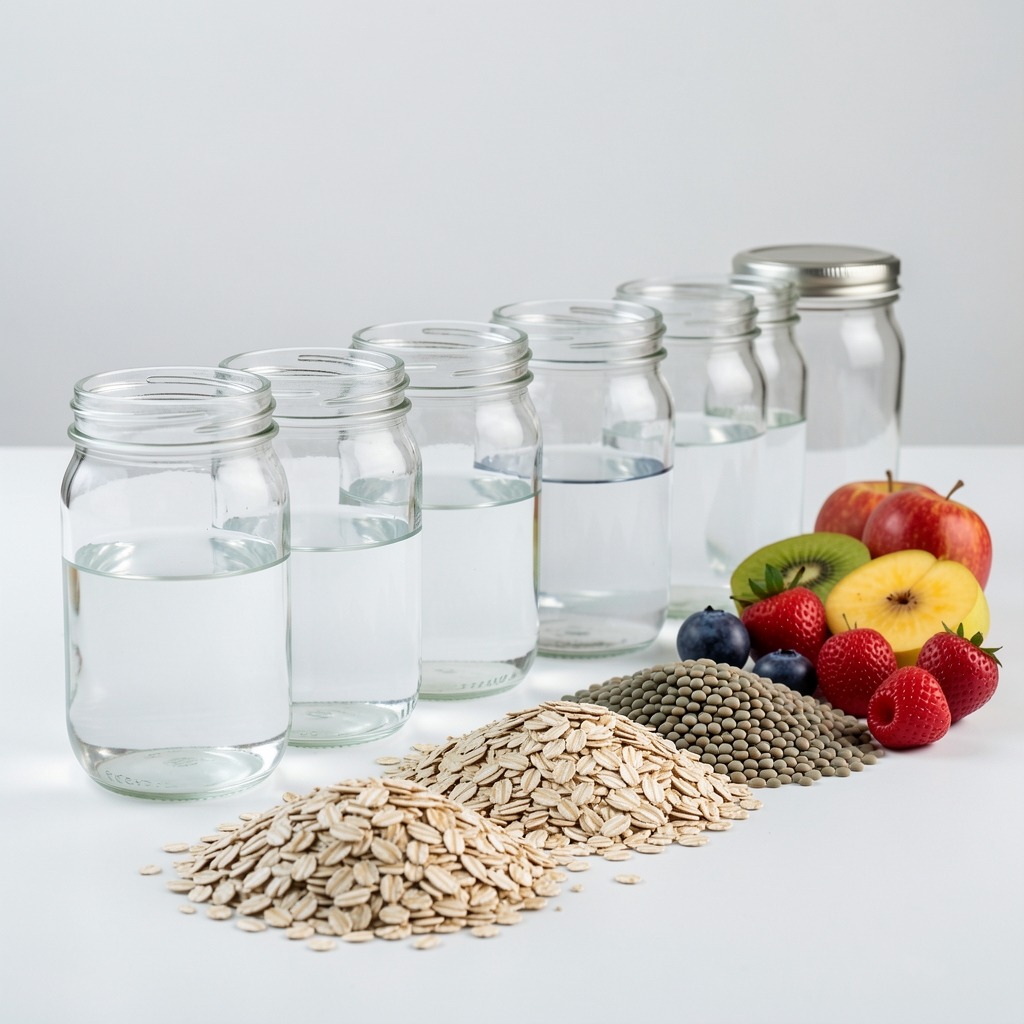
Daily hydration reference setup — illustrating volume distribution across a working day. Taronel Notebook archive, March 2026.
Gut-Supportive Ingredient Selection for Home Cooking
The ingredients most consistently associated with gut-supportive eating patterns in published nutritional research are those with high prebiotic fibre content — compounds that specifically serve as substrate for fermentation by beneficial gut bacteria. Garlic, onions, leeks, asparagus, and Jerusalem artichokes supply inulin and fructooligosaccharides, which are among the best-characterised prebiotic compounds. They are also everyday culinary ingredients, not specialist products.
Fermented foods supply live bacterial cultures alongside the other nutrients in the food matrix. Natural yoghurt (without added sugar), kefir, unpasteurised sauerkraut, kimchi, and miso are the most accessible fermented foods in UK grocery environments. Their contribution to gut bacterial diversity is the subject of ongoing nutritional research; the current evidence base supports their inclusion in a varied diet as a positive contributor to gut bacterial composition, though the specific strains and quantities required for measurable effects remain an active area of investigation.
From a home-cooking standpoint, integrating both categories — prebiotic vegetables and fermented foods — into a weekly menu does not require specialist procurement or preparation. Leeks and onions appear in soups, stews, and stir-fries. A portion of natural yoghurt at breakfast or as a sauce base for roasted vegetables adds a fermented element without additional cooking. Kimchi or sauerkraut as a condiment alongside a midweek grain bowl takes no additional preparation time at all.
A Practical Daily Fibre and Fluid Protocol
Combining the fibre-intake and hydration recommendations into a single daily eating protocol removes the cognitive overhead of tracking two separate variables. The following framework, based on published dietary guidance, supplies approximately 28–32g of dietary fibre per day alongside 1.8–2.2 litres of total fluid from drinking sources.
Morning: 400ml water on waking. Breakfast of 40g oats cooked with 300ml water or plant milk, topped with mixed seeds and a piece of fruit. This single meal supplies approximately 8–10g of fibre and 500–700ml of fluid. Midmorning: 250ml of water or herbal infusion. Lunch: a grain-and-vegetable bowl incorporating 100g of cooked legumes alongside 150g of mixed vegetables and a wholegrain base — approximately 12–15g of fibre. 300ml of water with the meal.
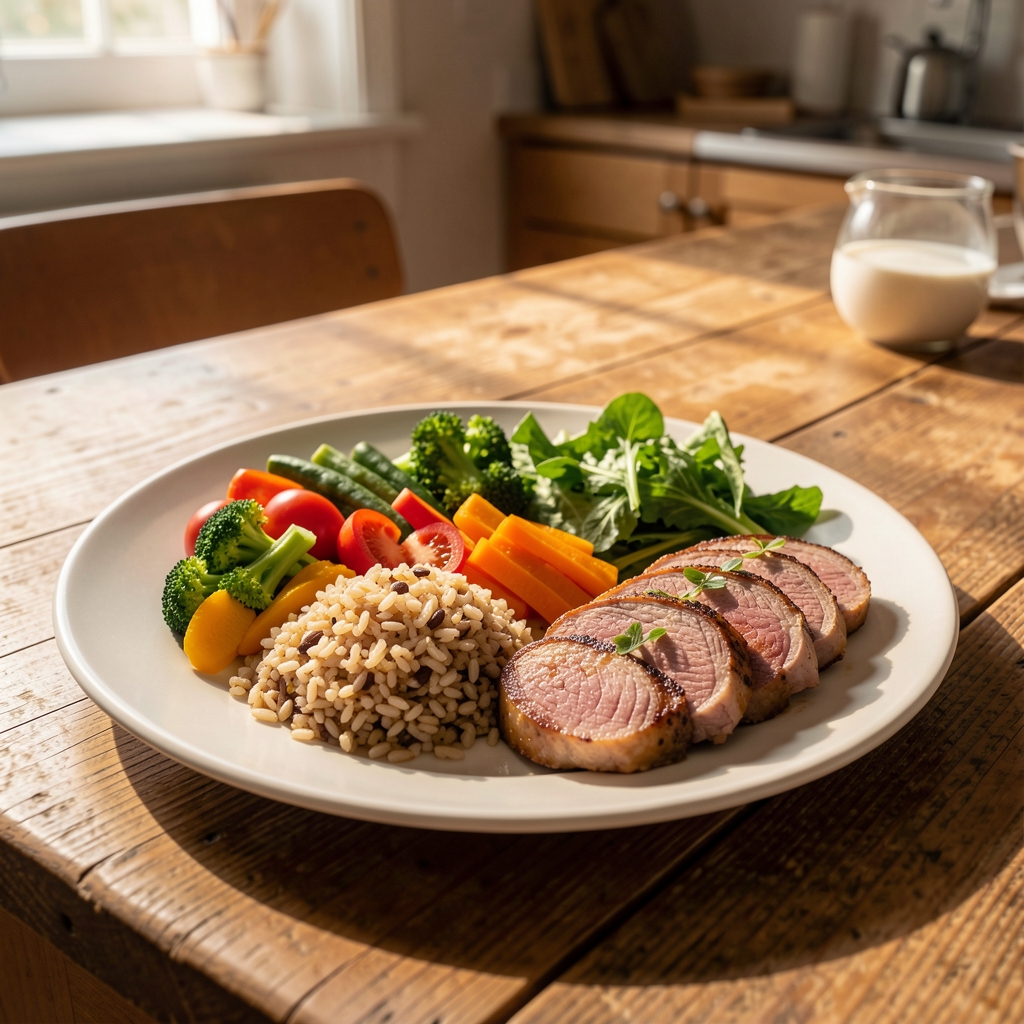
Afternoon: 250ml of water. Evening: a balanced plate per the proportional model outlined in the first article, with the vegetable zone contributing approximately 4–6g of additional fibre, and the wholegrain carbohydrate contributing 2–3g. The cumulative total from this structure — without supplementation of any kind — reaches the 30g daily fibre reference level, while total drinking fluid approaches 1.5–1.8 litres. This is an achievable pattern within an ordinary working day and an ordinary UK grocery procurement cycle.
Editorial Note — Nutritional data in this article is sourced from SACN's Carbohydrates and Health report (2015), EFSA Dietary Reference Values for Water (2010), and McCance and Widdowson's Composition of Foods (7th edition). This article is editorial in nature. Readers with specific concerns about their daily routines are encouraged to speak with a qualified wellness professional.